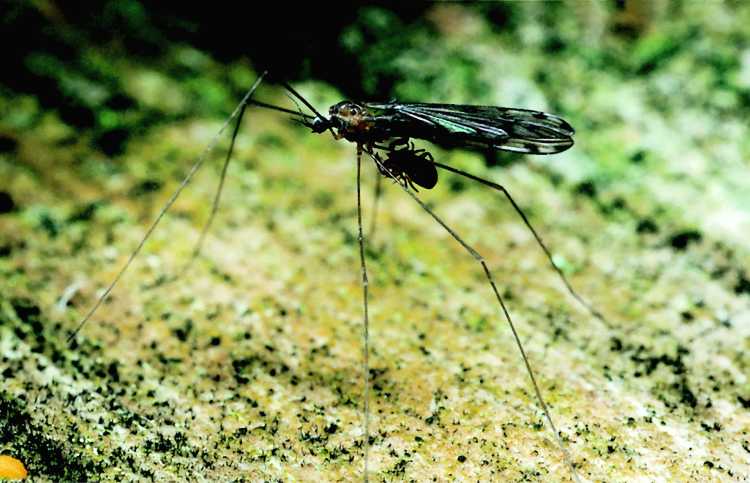
| LIMONIIDAE |
| |
| CHIONEINAE |
| = Eriopterinae |
| |
|
|
|
|
|
|
|
|
| |
Arctoconopa Alexander, 1955 |
| |
melampodia (Loew, 1873)  |
N; added by Dek et al. (2014: 21 ) ) |
| |
|
|
|
|
|
|
|
|
| |
Cheilotrichia Rossi, 1848 |
| |
subg. Cheilotrichia Rossi, 1848 |
| |
imbuta (Meigen, 1818) |
N |
| |
subg. Empeda Osten Sacken, 1869 |
| |
= Platytoma Lioy, 1863: precocc. |
| |
cinerascens (Meigen, 1804) |
N |
| |
= nubila (Schummel, 1829) |
| |
|
|
|
|
|
|
|
|
| |
Chionea Dalman, 1816 |
| |
subg. Sphaeconophilus Becker, 1912 |
| |
= Niphadobata Enderlein, 1936 |
| |
belgica (Becker, 1912) |
N; added by Heijerman (1987: 113) |
| |
= araneoides Dalman, 1816: misident. |
| |
|
|
|
|
|
|
|
|
| |
Ellipteroides Becker, 1907 |
| |
subg. Ellipteroides Becker, 1907 |
| |
lateralis (Macquart, 1835) |
N |
| |
subg. Protogonomyia Alexander, 1934 |
| |
alboscutellatus (von Roser, 1840) |
N |
| |
|
|
|
|
|
|
|
|
| |
Erioconopa Stary, 1976 |
| |
diuturna (Walker, 1848) |
N; added by Starý & Van Zuijlen (2020: 367) and Mol et al. (2020:134) |
| |
trivialis (Meigen, 1818) |
N |
| |
= ciliaris (Schummel, 1829) |
| |
|
|
|
|
|
|
|
|
| |
Erioptera Meigen, 1803 |
| |
= Polymeda Meigen, 1800: suppr. |
| |
subg. Erioptera Meigen, 1803 |
| |
beckeri Kuntze, 1914 |
N; added by Starý & Oosterbroek (2008: 3) |
| |
divisa (Walker, 1848) |
N |
| |
= macrophthalma Loew, 1871 |
| |
flavata (Westhoff, 1882) |
N |
| |
= flavescens (Linnaeus, 1758): misident. |
| |
= gemina (Tjeder, 1967) |
| |
fuscipennis Meigen, 1818 |
N |
| |
fusculenta Edwards, 1938 |
N; added by Doorman (1962: 190) |
| |
griseipennis Meigen, 1838 |
N |
| |
limbata Loew, 1873 |
N; added by Cuppen (2009: 7) |
| |
lutea Meigen, 1804 |
N |
| |
= taenionota Meigen, 1818 |
| |
meijerei Edwards, 1921 |
N |
| |
= meyerei Edwards, 1921: emend. |
| |
minor De Meijere, 1920 |
Note 1  |
| |
minor De Meijere, 1920 |
T |
| |
= minor De Meijere, 1920: nomen nudum |
| |
nielseni De Meijere, 1921 |
N |
| |
squalida Loew, 1871 |
N |
| |
subg. Mesocyphona Osten Sacken, 1869 |
| |
bivittata (Loew, 1873) |
N |
Note 2 |
| |
|
|
|
|
|
|
|
|
| |
Gnophomyia Osten Sacken, 1860 |
| |
lugubris (Zetterstedt, 1838) |
N; added by Theowald (1971: 226) |
| |
= sylvatica Meigen, 1818: misident. |
| |
= tripudians Bergroth, 1891 |
| |
viridipennis (Gimmerthal, 1847) |
N |
Note 3 |
| |
|
|
|
|
|
|
|
|
| |
Gonempeda Alexander, 1924 |
| |
flava (Schummel, 1829) |
N |
| |
|
|
|
|
|
|
|
|
| |
Gonomyia Meigen, 1818 |
| |
subg. Gonomyia Meigen, 1818 |
| |
abscondita Lackschewitz, 1935 |
N; added by Starý (2011: 238) |
| |
dentata De Meijere, 1920 |
T |
| |
= incisurata Tonnoir in Goetghebuer & Tonnoir, 1920 |
| |
lucidula De Meijere, 1920 |
T |
| |
recta Tonnoir in Goetghebuer & Tonnoir, 1920 |
N; added by Starý & Oosterbroek (2008: 4) |
| |
tenella (Meigen, 1818) |
N |
| |
subg. Prolipophleps Savchenko, 1972 |
| |
abbreviata Loew, 1873 |
N |
| |
= lurida Loew, 1873: misident. |
| |
|
|
|
|
|
|
|
|
| |
Hoplolabis Osten Sacken, 1869 |
| |
subg. Parilisia Savchenko, 1972 |
| |
areolata (Siebke, 1872) |
N |
| |
= pallens Loew, 1873 |
| |
subalpina (Bangerter, 1947) |
N; added by Starý & Van Zuijlen (2020: 362) and Mol et al. (2020:134) |
| |
vicina (Tonnoir in Goetghebuer & Tonnoir, 1920) |
N |
| |
|
|
|
|
|
|
|
|
| |
Ilisia Rondani, 1856 |
| |
maculata (Meigen, 1804) |
N |
| |
|
|
|
|
|
|
|
|
| |
Molophilus Curtis, 1833 |
| |
subg. Molophilus Curtis, 1833 |
| |
appendiculatus (Staeger, 1840) |
N |
| |
= armatus De Meijere, 1918 |
T |
| |
ater (Meigen, 1804) |
N; added by Theowald (1971: 227, 237) |
| |
bifidus Goetghebuer in Goetghebuer & Tonnoir, 1920 |
N; added by Theowald (1971: 227, 237) |
| |
bihamatus De Meijere, 1918 |
T |
| |
cinereifrons De Meijere, 1920 |
T |
Note 4 |
| |
= cinereifrons De Meijere, 1920: nomen nudum |
| |
corniger De Meijere, 1920 |
T |
Note 5 |
| |
= corniger De Meijere, 1920: nomen nudum |
| |
crassipygus De Meijere, 1918 |
T |
| |
= ochrescens Edwards, 1938 |
| |
curvatus Tonnoir in Goetghebuer & Tonnoir, 1920 |
N; added by Theowald (1971: 227, 237) |
| |
flavus Goetghebuer in Goetghebuer & Tonnoir, 1920 |
N |
| |
griseus (Meigen, 1804) |
N |
| |
= bifilatus Verrall, 1886 |
| |
medius De Meijere, 1918 |
T |
| |
niger Goetghebuer, 1920 |
N; added by Dek et al. (2014: 21) |
| |
obscurus (Meigen, 1818) |
N |
| |
occultus De Meijere, 1918 |
T |
| |
ochraceus (Meigen, 1818) |
N |
| |
= appendiculatus (Staeger, 1840): misident. |
| |
pleuralis De Meijere, 1920 |
T |
| |
= ochraceus (Meigen, 1818): misident. |
| |
= crassipes (Curtis, 1835): misident. |
| |
propinquus (Egger, 1863) |
| |
= gladius De Meijere, 1920 |
| |
propinquus (Egger, 1863) |
| |
serpentiger Edwards, 1938 |
N |
| |
= propinquus (Egger, 1863): misident. |
| |
|
|
|
|
|
|
|
|
| |
Neolimnophila Alexander, 1920 |
| |
alaskana Alexander, 1924 |
N; added by Kolcsár et al. (2021: 183) |
| |
carteri (Tonnoir in Goetghebuer & Tonnoir, 1921) |
N |
| |
placida (Meigen, 1830) |
N |
| |
|
|
|
|
|
|
|
|
| |
Ormosia Rondani, 1856 |
| |
subg. Ormosia Rondani, 1856 |
| |
bicornis (De Meijere, 1920) |
T |
| |
= cornuta (De Meijere, 1918): preocc. |
T |
| |
depilata Edwards, 1938 |
N |
| |
= hederae (Curtis, 1835) |
| |
hederae (Curtis, 1835) |
N |
| |
= uncinata (De Meijere, 1918) |
T |
| |
lineata (Meigen, 1804) |
N |
| |
nodulosa (Macquart, 1826) |
N |
| |
pseudosimilis (Lundström, 1912) |
N |
| |
= similis (Schummerl, 1829): misident. |
| |
|
|
|
|
|
|
|
|
| |
Rhabdomastix Skuse, 1890 |
| |
subg. Sacandaga Alexander, 1911 |
| |
laeta (Loew, 1873) |
N |
| |
|
|
|
|
|
|
|
|
| |
Rhypholophus Kolenati, 1860 |
| |
bifurcatus Goetghebuer, 1920 |
N; added by Dek & Oosterbroek (2013: 87) |
| |
haemorrhoidalis (Zetterstedt, 1838) |
N; added by Theowald (1971: 227, 237) |
| |
varius (Meigen, 1818) |
N; added by Theowald (1971: 227, 237) |
| |
|
|
|
|
|
|
|
|
| |
Scleroprocta Edwards, 1938 |
| |
pentagonalis (Loew, 1873) |
N; added by Theowald (1971: 227, 237) |
| |
= fascipennis (Zetterstedt, 1838): misident. |
| |
= sororcula (Zetterstedt, 1851): misident. |
| |
sororcula (Zetterstedt, 1851) |
N; added by Theowald (1971: 227, 237) |
| |
= danica (Nielsen, 1923) |
| |
|
|
|
|
|
|
|
|
| |
Symplecta Meigen, 1830 |
| |
subg. Psiloconopa Zetterstedt, 1838 |
| |
= Helobia Le Peletier & Serville, 1828 |
| |
= Acyphona Osten Sacken, 1869 |
| |
= Symplectomorpha Mik, 1886 |
| |
stictica (Meigen, 1818) |
| |
stictica (Meigen, 1818) |
| |
subg. Symplecta Meigen, 1830 |
| |
hybrida (Meigen, 1804) |
N |
| |
= punctipennis (Meigen, 1818) |
| |
|
|
|
|
|
|
|
|
| |
Tasiocera Skuse, 1890 |
| |
subg. Dasymolophilus Goetghebuer in Goetghebuer & Tonnoir, 1920 |
| |
murina (Meigen, 1818) |
N |
| |
|
|
|
|
|
|
|
|
| |
Trimicra Osten Sacken, 1861 |
Note 6 |
| |
pilipes (Fabricius, 1787) |
| |
pilipes (Fabricius, 1787) |
| |
| LIMNOPHILINAE |
| = Hexatominae |
| |
|
|
|
|
|
|
|
|
| |
Adelphomyia Bergroth, 1891 |
| |
punctum (Meigen, 1818) |
N |
| |
|
|
|
|
|
|
|
|
| |
Austrolimnophila Alexander, 1920 |
| |
subg. Austrolimnophila Alexander, 1920 |
| |
ochracea (Meigen, 1804) |
N |
| |
|
|
|
|
|
|
|
|
| |
Dicranophragma Osten Sacken, 1860 |
| |
subg. Brachylimnophila Alexander, 1966 |
Note 7 |
| |
adjunctum (Walker, 1848) |
N |
| |
= dimidiatum (De Meijere, 1918) |
T |
| |
nemorale (Meigen, 1818) |
N |
| |
= leucophaeum (Meigen, 1818) |
| |
= memorale (Meigen, 1818): incorrect spelling |
| |
|
|
|
|
|
|
|
|
| |
Epiphragma Osten Sacken, 1860 |
| |
ocellare (Linnaeus, 1761) |
| |
= pictum (Fabricius, 1798) |
| |
ocellare (Linnaeus, 1761) |
| |
|
|
|
|
|
|
|
|
| |
Euphylidorea Alexander, 1972 |
| |
aperta (Verrall, 1887) |
N |
| |
dispar (Meigen, 1818) |
N |
| |
lineola (Meigen, 1804) |
N |
| |
meigenii (Verrall, 1887) |
N; added by Theowald (1971: 225, 235) |
| |
phaeostigma (Schummel, 1829) |
N |
| |
|
|
|
|
|
|
|
|
| |
Eutonia Van der Wulp, 1874 |
| |
barbipes (Meigen, 1804) |
N |
| |
|
|
|
|
|
|
|
|
| |
Hexatoma Latreille, 1809 |
| |
= Anisomera Meigen, 1818 |
| |
subg. Hexatoma Latreille, 1809 |
| |
gaedii (Meigen, 1830) |
N |
| |
= saxonum (Loew, 1865) |
| |
nubeculosa (Burmeister, 1829) |
Note 8 |
| |
nubeculosa (Burmeister, 1829) |
| |
|
|
|
|
|
|
|
|
| |
Idioptera Macquart, 1834 |
| |
= Eloeophila Rondani, 1856 |
Note 9 |
| |
= Elaeophila Rondani, 1856: incorrect spelling |
| |
= Ephelia Schiner, 1863 |
| |
= Ophelia Schiner, 1863: incorrect spelling |
| |
linnei Oosterbroek, 1992 |
N |
| |
= fasciata (Linnaeus, 1767): preocc. |
| |
maculata (Meigen, 1804) |
N |
Note 10 |
| |
= marmorata (Meigen, 1818) |
| |
pulchella (Meigen, 1830) |
N |
| |
submarmorata (Verrall, 1887) |
N; added by Theowald (1971: 225, 235) |
Note 11 |
| |
trimaculata (Zetterstedt, 1838) |
N; added by Theowald (1971: 225, 235) |
Note 12 |
| |
verralli (Bergroth, 1912) |
N |
Note 13 |
| |
= miliaria (Egger, 1863): misident. |
| |
= dalei (Edwards, 1921) |
| |
= dahlei (Edwards, 1921) |
| |
|
|
|
|
|
|
|
|
| |
Limnophila Macquart, 1834 |
| |
= Poecilostola Schiner, 1863 |
| |
subg. Limnophila Macquart, 1834 |
| |
arnoudi Theowald, 1971 |
T; added by Theowald (1971: 224, 234) |
| |
pictipennis (Meigen, 1818) |
N |
| |
= angustipennis (Meigen, 1818) |
| |
schranki Oosterbroek, 1992 |
N |
| |
= punctata (Schrank, 1781): preocc. |
| |
|
|
|
|
|
|
|
|
| |
Neolimnomyia Séguy, 1937 |
| |
subg. Neolimnomyia Séguy, 1937 |
| |
batava (Edwards, 1938) |
N |
| |
= leucophaea (Meigen, 1818): misident. |
| |
filata (Walker, 1856) |
N |
| |
|
|
|
|
|
|
|
|
| |
Paradelphomyia Alexander, 1936 |
| |
subg. Oxyrhiza De Meijere, 1946 |
| |
= Oxydiscus De Meijere, 1913: |
| |
nielseni (Kuntze, 1919) |
N; added by Theowald (1971: 225, 236) |
| |
senilis (Haliday, 1833) |
N |
| |
= selenis (Haliday, 1833): incorrect spelling |
| |
= fuscula (Loew, 1873): misident. |
| |
|
|
|
|
|
|
|
|
| |
Phylidorea Bigot, 1854 |
| |
= Philidorea Bigot, 1854: incorrect spelling |
| |
subg. Paraphylidorea Savchenko, 1986 |
| |
fulvonervosa (Schummel, 1829) |
N |
| |
= lineolella (Verrall, 1887) |
| |
= lineonella (Verrall, 1887): incorrect spelling |
| |
subg. Phylidorea Bigot, 1854 |
| |
abdominalis (Staeger, 1840) |
N |
| |
ferruginea (Meigen, 1818) |
N |
| |
longicornis (Schummel, 1829) |
| |
longicornis (Schummel, 1829) |
added as glabricula by Theowald (1971: 225, 235) |
| |
= glabricula (Meigen, 1830) |
| |
squalens (Zetterstedt, 1838) |
| |
squalens (Zetterstedt, 1838) |
| |
= bicolor (Meigen, 1804): misident. |
| |
|
|
|
|
|
|
|
|
| |
Pilaria Sintenis, 1889 |
| |
discicollis (Meigen, 1818) |
| |
discicollis (Meigen, 1818) |
| |
fuscipennis (Meigen, 1818) |
N |
| |
scutellata (Staeger, 1840) |
N |
| |
= subtincta (Zetterstedt, 1851) |
| |
|
|
|
|
|
|
|
|
| |
Pseudolimnophila Alexander, 1919 |
| |
lucorum (Meigen, 1818) |
N |
| |
sepium (Verrall, 1886) |
N |
| |
| LIMONIINAE |
| |
|
|
|
|
|
|
|
|
| |
Achyrolimonia Alexander, 1965 |
| |
decemmaculata (Loew, 1873) |
N; added by Theowald (1971: 223, 232) |
| |
neonebulosa (Alexander, 1924) |
N; added by Oosterbroek (2009: 180) |
| |
|
|
|
|
|
|
|
|
| |
Antocha Osten Sacken, 1860 |
Note 14 |
| |
= Taphrophila Rondani, 1856 |
| |
subg. Antocha Osten Sacken, 1860 |
| |
vitripennis (Meigen, 1830) |
N |
| |
= opalizans Osten Sacken, 1860: sensu auct. |
| |
|
|
|
|
|
|
|
|
| |
Atypophthalmus Brunetti, 1911 |
| |
subg. Atypophthalmus Brunetti, 1911 |
| |
inustus (Meigen, 1818) |
N; added by Dek et al. (2014: 20) |
| |
umbratus De Meijere, 1911 |
I; added by Oosterbroek (2009: 180) |
| |
|
|
|
|
|
|
|
|
| |
Dicranomyia Stephens, 1829 |
| |
subg. Dicranomyia Stephens, 1829 |
| |
affinis (Schummel, 1829) |
N; added by Dek (2021: 72) |
| |
autumnalis (Staeger, 1840) |
N |
| |
chorea (Meigen, 1818) |
N |
| |
didyma (Meigen, 1804) |
N |
| |
distendens Lundström, 1912 |
| |
distendens Lundström, 1912 |
| |
frontalis (Staeger, 1840) |
N |
| |
= ostensackeni Westhoff, 1882 |
| |
longipennis (Schummel, 1829) |
I |
Note 15 |
| |
lucida De Meijere, 1918 |
T |
| |
mitis (Meigen, 1830) |
N |
| |
= lutea (Meigen, 1818): preocc. |
| |
modesta (Meigen, 1818) |
N |
| |
omissinervis De Meijere, 1918 |
T |
| |
ornata (Meigen, 1818) |
N |
| |
sera (Walker, 1848) |
N |
| |
= forcipula De Meijere, 1918 |
T |
| |
ventralis (Schummel, 1829) |
N |
| |
subg. Glochina Meigen, 1830 |
| |
kinensis (Alexander, 1934) |
N; added by Stary (1986: 103) |
| |
sericata (Meigen, 1830) |
N; added by Beuk (2019a: 295) |
| |
tristis (Schummel, 1829) |
N; added by Stary (1986: 103) |
| |
subg. Idiopyga Savchenko, 1987 |
| |
danica Kuntze, 1919 |
N |
| |
melleicauda Alexander, 1917 |
| |
complicata De Meijere, 1918 |
T |
| |
subg. Melanolimonia Alexander, 1965 |
| |
morio (Fabricius, 1787) |
N |
| |
= leucocephala (Meigen, 1818) |
| |
subg. Numantia Bigot, 1854 |
| |
fusca (Meigen, 1804) |
N |
| |
= pilipennis (Egger, 1863) |
| |
|
|
|
|
|
|
|
|
| |
Dicranoptycha Osten Sacken, 1860 |
| |
fuscescens (Schummel, 1829) |
N |
| |
= cinerascens (Meigen, 1818): misident. |
| |
|
|
|
|
|
|
|
|
| |
Helius Le Peletier & Serville in Latreille, 1828 |
| |
= Megarhina Le Peletier & Serville in Latreille, 1828 |
| |
= Rhamphidida Meigen, 1830 |
| |
subg. Helius Le Peletier & Serville in Latreille, 1828 |
| |
flavus (Walker, 1856) |
N |
| |
longirostris (Meigen, 1818) |
| |
longirostris (Meigen, 1818) |
| |
pallirostris Edwards, 1921 |
N; added by Savchenko et al. (1992: 322) |
| |
|
|
|
|
|
|
|
|
| |
Limonia Meigen, 1803 |
| |
= Limnobia Meigen, 1818 |
| |
dilutior (Edwards, 1921) |
N |
| |
flavipes (Fabricius, 1787) |
N |
| |
hercegovinae (Strobl, 1898) |
N |
Note 16 |
| |
macrostigma (Schummel, 1829) |
N |
| |
nigropunctata (Schummel, 1829) |
| |
nigropunctata (Schummel, 1829) |
| |
nubeculosa Meigen, 1804 |
N |
| |
phragmitidis (Schrank, 1781) |
N |
| |
= tripunctata (Fabricius, 1782): preocc. |
| |
stigma (Meigen, 1818) |
N |
| |
trivittata (Schummel, 1829) |
N |
| |
|
|
|
|
|
|
|
|
| |
Lipsothrix Loew, 1873 |
| |
remota (Walker, 1848) |
N |
| |
|
|
|
|
|
|
|
|
| |
Metalimnobia Matsumura, 1911 |
| |
bifasciata (Schrank, 1781) |
| |
= xanthoptera (Meigen, 1804) |
| |
bifasciata (Schrank, 1781) |
| |
quadrimaculata (Linnaeus, 1761) |
N; added by Theowald (1954a: 30) |
Note 17 |
| |
quadrinotata (Meigen, 1818) |
| |
quadrinotata (Meigen, 1818) |
| |
|
|
|
|
|
|
|
|
| |
Neolimonia Alexander, 1964 |
| |
dumetorum (Meigen, 1804) |
N |
| |
|
|
|
|
|
|
|
|
| |
Rhipidia Meigen, 1818 |
| |
subg. Rhipidia Meigen, 1818 |
| |
ctenophora Loew, 1871 |
N |
| |
maculata Meigen, 1818 |
N |
| |
= duplicata (Doane, 1900) |
| |
uniseriata Schiner, 1864 |
| |
uniseriata Schiner, 1864 |
| |
|
|
|
|
|
|
|
|
| |
Thaumastoptera Mik, 1866 |
| |
subg. Thaumastoptera Mik, 1866 |
| |
calceata Mik, 1866 |
N; added by Kolcsár et al. (2021: 238) |
| |
| Doubtful species |
| |
| |
Chionea Dalman, 1816 |
|
|
| |
subg. Sphaeconophilus Becker, 1912 |
|
| |
lutescens Lundström, 1907 |
|
Note 18 |
| |
| Deleted species |
| |
| |
Dicranomyia Stephens, 1829 |
|
| |
subg. Dicranomyia Stephens, 1829 |
|
| |
stigmatica (Meigen, 1830) |
added by Savchenko et al. (1992: 348) |
Note 19 |
| |
| |
Elliptera Schiner, 1863 |
|
| |
subg. Elliptera Schiner, 1863 |
|
| |
omissa Schiner, 1863 |
added by Savchenko et al. (1992: 327) |
Note 20 |
| |
| |
Limonia Meigen, 1803 |
|
| |
sylvicola (Schummel, 1829) |
added by Savchenko et al. (1992: 362) |
Note 21 |
| |
| |
Ormosia Rondani, 1856 |
|
| |
subg. Ormosia Rondani, 1856 |
|
| |
fascipennis (Zetterstedt, 1838) |
added by Savchenko (1989: 215) |
Note 22 |
| |
| |
Pilaria Sintenis, 1889 |
|
| |
decolor (Zetterstedt, 1851) |
added by Savchenko (1986: 334) |
Note 23 |
| |
| Notes |
| Note 1 |
Described by De Meijere (1920b: 71), but earlier mentioned in De Meijere (1920a: 168). |
| Note 2 |
Confirmed for the Netherlands by Starý & Oosterbroek (2008: 3). |
| Note 3 |
Again added by Doorman (1962: 190). |
| Note 4 |
Described by De Meijere (1920b: 59), but earlier mentioned in De Meijere (1920a: 168). |
| Note 5 |
Described by De Meijere (1920b: 64), but earlier mentioned in De Meijere (1920a: 168). |
| Note 6 |
Systematic position according to Theischinger (1996: 129). |
| Note 7 |
Systematic placement after Starý & Reusch (2009). |
| Note 8 |
Van der Wulp (1877: 435) referred to a single female that was probably captured in the province of Gelderland. This material is no longer present in the Dutch collections and H. nubeculosa has not been captured since in the Netherlands. |
| Note 9 |
Synonymy with Idioptera established by Santo & Ribeiro (2024: 12). |
| Note 10 |
Transferred to Idioptera by Santo & Ribeiro (2024: 12). |
| Note 11 |
Transferred to Idioptera by Santo & Ribeiro (2024: 14). |
| Note 12 |
Transferred to Idioptera by Santo & Ribeiro (2024: 6). |
| Note 13 |
Transferred to Idioptera by Santo & Ribeiro (2024: 13). |
| Note 14 |
The type-species of Taphrophila was misidentified and the current usage of the name should be fixed by the designation of a new type-species for Taphrophila (see Chandler, 1998a: 8). |
| Note 15 |
This species was found only once in the Netherlands in October 1987 on Bonsai trees imported from the Far East (China, Taiwan) in a glasshouse near Vleuten. It has a wide Holarctic distribution, from Canada in the west to Japan in the east. |
| Note 16 |
Deleted from the Dutch list by De Meijere (1946a: 11), again added by Theowald (1971: 222). |
| Note 17 |
Again added by Theowald (1971: 222, 231). |
| Note 18 |
No Dutch material of C. (S.) lutescens was studied and the presence of the species in the Netherlands is considered doubtful (Heijerman, 1987: 115). There are two Dutch records (De Meijere, 1913: ii [as araneoides; see also Heselhaus, 1914] and Schmitz, 191bb: xxvii), but no material relating to these records could be traced. |
| Note 19 |
Van der Wulp (1877: 405) recorded a male from Den Haag and three specimens from the province of Friesland (as Limnobia stigmatica). Later, Van der Wulp & De Meijere (1898: 29) referred to material originating from Plasmolen, Koudekerke, ’s-Gravenhage, Schoorl, and Leeuwarden. As all this material had been misidentified and actually belonged to D. autumnalis, De Meijere (1919: 65; 1920b: 192) deleted D. stigmatica from the Dutch list. All subsequent references to the presence of this species in the Netherlands are probably based on earlier Dutch records of misidentified material and there are no reliable records of this species from the Netherlands. |
| Note 20 |
Van der Wulp (1877: 392) noted that he knew E. omissa from a Swiss specimen only. Savchenko (1989: 280), probably misinterpreting Van der Wulp (1877), erroneously recorded the species for the Netherlands. All subsequent references to the occurrence of E. omissa in the Netherlands are mistaken since there are no reliable records of this species from the Netherlands. |
| Note 21 |
De Meijere (1919: 93) marked L. sylvicola with an asterisk, meaning that the species does not occur in the Netherlands. Geiger (1986: 121) mentioned the species for the Netherlands, referring to De Meijere (1919), but probably overlooking the asterisk or its meaning. All subsequent references to the occurrence of L. sylvicola in the Netherlands are mistaken since there are no reliable records of this species from the Netherlands. |
| Note 22 |
Without identifying the source of his information, Savchenko (1989: 215) referred to this species as occurring in the Netherlands. All subsequent references to the occurrence of this species in the Netherlands are mistaken since there are no reliable records of this species from the Netherlands. |
| Note 23 |
Savchenko (1986: 334), referring to Theowald (1971) listed this species for the Netherlands. Theowald (1971) does not mention the species, and Savchenko's reference is erroneous. All subsequent references to the occurrence of this species in the Netherlands are mistaken since there are no reliable records of this species from the Netherlands. |
| |
| The latest revisions at different levels |
| The family introduction was last edited on 09-06-2021 16:09 |
| Eloeophila was the last (sub)genus to be edited on 29-01-2024 15:12 |
| Erioptera lutea was the last (sub)species to be edited on 17-10-2024 16:25 |

 31,017,599 unique visits