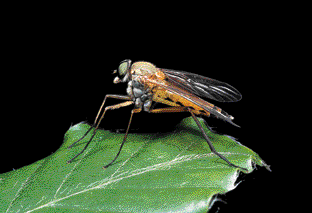
Diagnosis. Small to rather large flies (2.5-15.0 mm). Head spherical and without strong setae; antennae small; third antennal segment reniform or rounded to conical; arista apical or dorsal; mouthparts fleshy but adapted for blood-sucking in female Symphoromyia. Thorax somewhat arched and without strong setae; surface often with pattern of dusting and sometimes with kinky pilosity. Wing membrane hyaline or with markings; R with four branches; discal cell present, generally emitting three veins; cell cup long and either closed or open at the wing margin. Legs long and slender. Abdomen long and tapering, in female generally broader near base.
Biology. Larvae generally living of decaying organic matter in soil or possible dead wood, and may be predators. Adult females of Symphoromyia suck blood on mammals; otherwise little is known about feeding habits but several species have been seen to feed on honeydew.
General references. Van der Goot (1985c [key]), James & Turner (1981 [general, key to genera]), Majer (1988 [catalogue], 1997a [key to genera, general]).
References to the local fauna. Van Aartsen (1997), Van der Goot (1985c), Kabos (1942a), Majer (1988), Schonewille et al. (2001), Van der Wulp & De Meijere (1898).
How to quote this page: Beuk, P.L.Th., & V.S. van der Goot, 2021. Family Rhagionidae. In: Beuk, P.L.Th. (Ed.): Checklist of the Diptera of the Netherlands, https://diptera-info.nl/news.php?fam=Rhagionidae (date accessed: 13/06/2026).
NL: 20
B: 22
D: 19
UK: 25
World: 560
RHAGIONIDAE
Chrysopilus Macquart, 1826
asiliformis (Preyssler, 1791)
= diadema (Linnaeus, 1767)
= aureus (Meigen, 1804)
= flaveolus (Meigen, 1820): misident. sensu auct.
Note 1
cristatus (Fabricius, 1775)
Note 2
= auratus (Fabricius, 1805)
laetus Zetterstedt, 1842
N; added by Zeegers et al. (2021: 139)
luteolus (Fallén, 1814)
Note 3
= nubecula (Fallén, 1814): misident. sensu Kabos, 1942
nubecula (Fallén, 1814)
N; added by Zeegers et al. (2021: 138)
splendidus (Meigen, 1820)
= nigritus (Fabricius, 1794): misident. sensu Van der Wulp & De Meijere, 1898
Ptiolina Zetterstedt, 1842
obscura (Fallén, 1824)
= nigra Zetterstedt, 1842: misident. sensu Van der Wulp & De Meijere, 1898
= nigrina Wahlberg, 1854: misident. sensu auct.
Note 4
Rhagio Fabricius, 1775
= Leptis Fabricius, 1805
annulatus (De Geer, 1776)
conspicuus Meigen, 1804
immaculatus (Meigen, 1804)
lineola Fabricius, 1794
maculatus (De Geer, 1776)
notatus (Meigen, 1820)
scolopaceus (Linnaeus, 1758)
strigosus (Meigen, 1804)
tringarius (Linnaeus, 1758)
vitripennis (Meigen, 1820)
Spania Meigen, 1830
nigra Meigen, 1830
added by Van Aartsen (1997: 7)
Symphoromyia von Frauenfeld, 1867
subg. Paraphoromyia Becker, 1921
crassicornis (Panzer, 1806)
added by Kabos (1942a: xxxiii)
subg. Symphoromyia von Frauenfeld, 1867
immaculata (Meigen, 1804)
Notes
Note 1
Misidentification pointed out by Zeegers et al. (2021: 137).
Note 2
The name cristatus was introduced to the Dutch list for the first time by Beuk & Van der Goot (2002d). On the British lists this name has been used for this species since early last century (see Chandler, 1998a: 72), but continental workers seemed to be unwilling to accept the synonymy as suggested by Verrall (1901). Examination of relevant publications has lead to believe that Verrall was right in his suggestion that cristatus is indeed a senior synonym of auratus.
Note 3
Again added as nubecula by Kabos (1942a: xxxiii).
Note 4
Misidentification pointed out by Zeegers et al. (2021: 140).
The latest revisions at different levels
Rhagionidae was the last (sub)family to be edited on 03-07-2013 18:34
Paraphoromyia was the last (sub)genus to be edited on 03-07-2013 17:24
Chrysopilus nubecula was the last (sub)species to be edited on 31-07-2021 21:48

 31,119,412 unique visits